
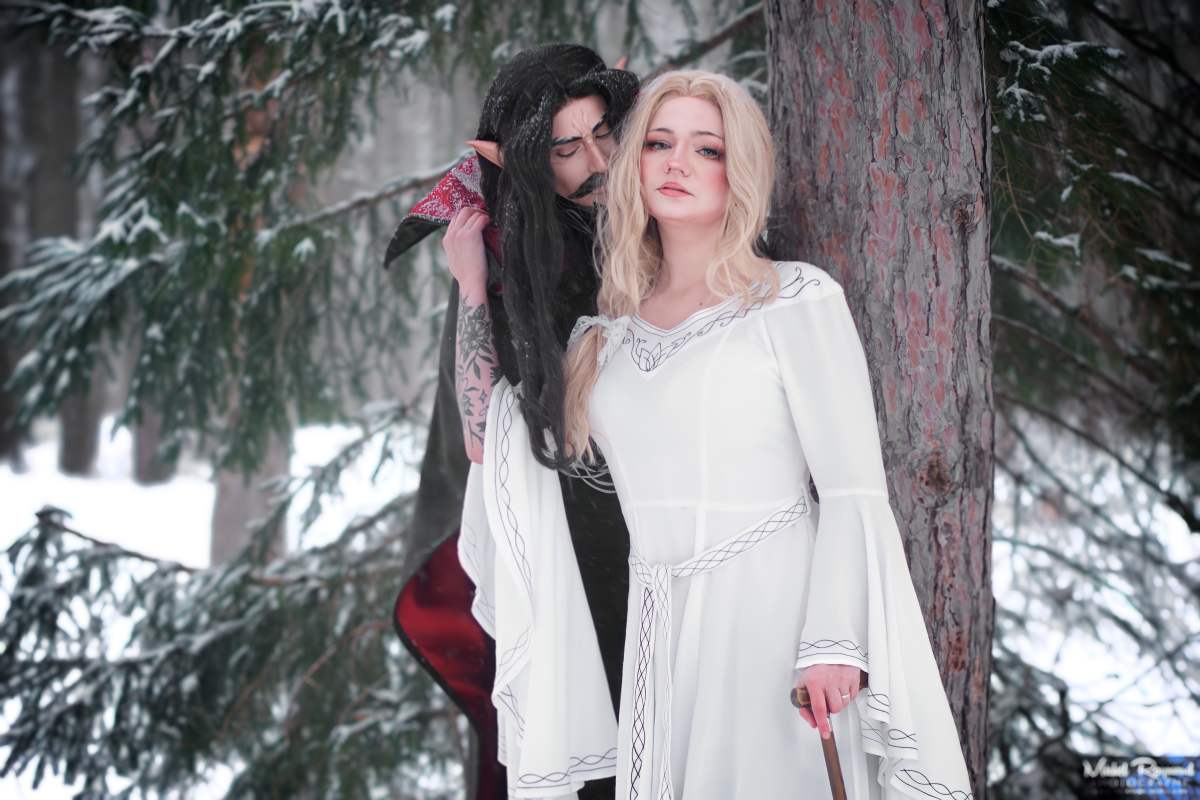
Here's the thing nobody warns you about when you start planning what to wear to a Renaissance fair - the weather plays a BIG role in your outfit.
And this is especially true in the colder months: the challenge isn't finding something beautiful to wear, it's finding something beautiful to wear that won't have you huddled by a brazier for warmth before the second act of the jousting tournament. Cold weather renaissance dressing is its own art form, and once you crack it, you'll wonder why you ever thought it was complicated.
The good news is that historical fashion was already doing all the heavy lifting for you. The medieval and Renaissance periods were not known for their central heating, and the clothing of the era reflects that. Layers, heavy fabrics, voluminous skirts, fur-trimmed cloaks: this is an aesthetic that was literally designed for cold weather. You just need to know how to work with it.
Start With Your Base and Build Up
The single most effective thing you can do for a winter renaissance outfit is think of it in layers rather than as a single garment. Your dress is the centrepiece, not the whole picture, and what sits underneath it matters as much as what sits on top.
Thermal underlayers are your best friend here, and the beauty of renaissance styling is that they're completely invisible under a full-length gown. Slim thermal leggings under a floor-length skirt are invisible and transformative. A thin thermal top under a chemise under your bodice adds meaningful warmth without bulk. Nobody at the faire needs to know that your medieval maiden look is being quietly held together by modern knitwear underneath.
Over your dress, the historical options are genuinely excellent. A full-length cloak is the obvious choice, and it's obvious because it works. Choose something heavy, in velvet or wool-adjacent fabric, in a colour that complements your gown. A dramatic cloak is also, conveniently, one of the most visually striking additions you can make to any renaissance outfit, so warmth and aesthetics are fully aligned here.
Fabric Choice Does a Lot of the Work
Not all renaissance dress fabrics perform equally in cold weather, and this is where your selection of the gown itself becomes part of your warmth strategy. Velvet is the obvious winter choice: heavy, insulating, and extraordinarily beautiful in the low winter light of an outdoor event. Rich jewel tones, deep burgundy, forest green, midnight blue, look particularly striking in velvet and photograph brilliantly against an outdoor winter backdrop.
Heavier satins with some substance to them are another solid option, particularly for bodices and structured elements. The key is avoiding anything too lightweight or sheer as your outer layer. Save the diaphanous sleeve moments for summer faires; in winter, volume and weight in the fabric work in your favour.
If you're building an outfit around an existing dress that's lighter in weight, a fur-trimmed overdress or a structured velvet bodice worn on top of a full-length chemise gown is a time-honoured solution that's both historically accurate and genuinely practical.
Accessories That Work Hard

Winter renaissance accessories have a dual job: they need to complete the look and they need to be functional. Fingerless gloves in leather or heavy knit thread the needle between period-appropriate and practical, keeping your hands largely warm while allowing you to actually hold your turkey leg, your goblet, or your archery bow. Full gloves in leather or velvet are more committed to warmth at the cost of dexterity; your call depending on how involved you plan to be in the day's activities.
Head coverings are a particularly good area to explore for winter. Historically, head coverings were the norm across most of the medieval and Renaissance periods, so a beautifully styled hood, a structured hennin, or a fur-trimmed coif is both accurate and warm. This is one of those happy cases where the historically correct choice is also the comfortable one.
For footwear, the calculus shifts sharply in cold weather. Beautiful soft-soled period footwear is lovely in theory and miserable in practice if you're standing on cold ground for six hours. Ankle boots with a proper sole, styled to be as period-adjacent as possible, are a much better choice. Your feet being warm matters a great deal to your overall enjoyment of the day.
Leaning Into the Winter Aesthetic
There's a version of winter renaissance dressing that doesn't just tolerate the season but actively works with it. A dark, jewel-toned velvet gown with a fur-trimmed cloak, paired with rich gold or garnet jewellery, an elaborate braided hairstyle adorned with ribbon, and a pair of leather gloves: this is not a person who has compromised their outfit for the weather. This is a person whose outfit is enhanced by the winter setting.
The low, golden light of a winter afternoon does extraordinary things to rich, deep colours and luxurious fabrics. Photographs from winter faires often look more dramatic and visually striking than their summer equivalents precisely because the aesthetic lends itself to it. Lean into the drama. Jewel tones. Velvet. Dark colour palettes with rich metallic accents. A spectacular cloak. This is exactly the season for it.
So, ready to start browsing actual pieces? Check out HolyClothing's medieval renaissance dress collection, with a full range of styles in sizes S to 5X, all made from 100% vegan materials and ethically crafted to order.
Why Choose HolyClothing
HolyClothing has been dressing Renaissance faire enthusiasts since 2001, making every garment to order in 100% vegan, plant-based fabrics, in sizes small through 5X. No overproduction, no end-of-season clearance: just your dress, made for you, in the style you actually want. Every purchase over $149 also contributes 15% directly to charity. If you're building your winter faire wardrobe, start here.
0 comments